Guide
Smarter Workforce Intelligence: How To Scale Your People Decisions
Published:
People analytics has spent fifteen years proving that people data matters. Paul Rubenstein, Chief Evangelist at Visier, makes the case for the next evolution: Workforce Intelligence. He outlines five ways HR leaders can act on that ambition now and finally close the gap between knowing and doing.
· 7M Read

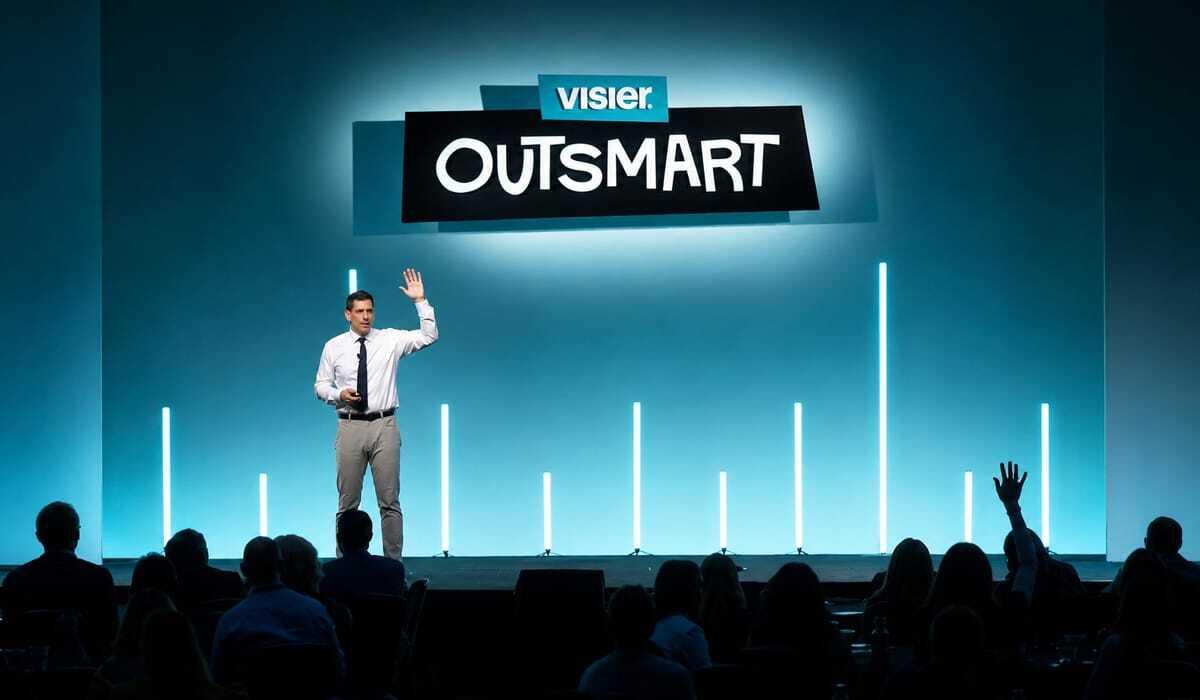
Let’s go back to just two weeks ago. I’m in Palm Springs, on the eve of Visier's annual user conference. Fifteen years ago, Visier was founded to help democratize insights and has since brought people analytics and workforce planning at scale to some of the world's leading companies.
This year's conference is the third since AI went mainstream. There will be some amazing technology to show off. There always is. But what is on my mind is a particular session on the future of people analytics.
This post was originally published on Paul Rubenstein's Substack, HR is Dead. Long Live HR (opens in a new tab).
I have been privileged to watch that conversation evolve year after year. The practitioners in that room have grown with it: more business-focused, more connected to enterprise strategy, more sophisticated in how they translate data into decisions. Year after year, the work has gotten better. Any CHRO who lacks data-driven people insights is now considered far behind their peers.
And yet something has shifted. What once felt like an aspiration now feels like a floor. Just consider what the profession has actually accomplished.
When people analytics took hold as a discipline, HR was still heavily valued for its instinct and influence. Decisions about hiring, promotion, restructuring, and retention were made by experienced leaders with good judgment and limited data.
The contribution of analytics fundamentally changed that relationship: to replace assertion with evidence, to make the invisible visible, and to give HR a language that the rest of the business could evaluate on its own terms.
That is not a small thing. It took years of political capital, investment in technology, data rigor, and, frankly, patience. But, HR finally moved from instinct to insight.
Now, the question is what comes next.
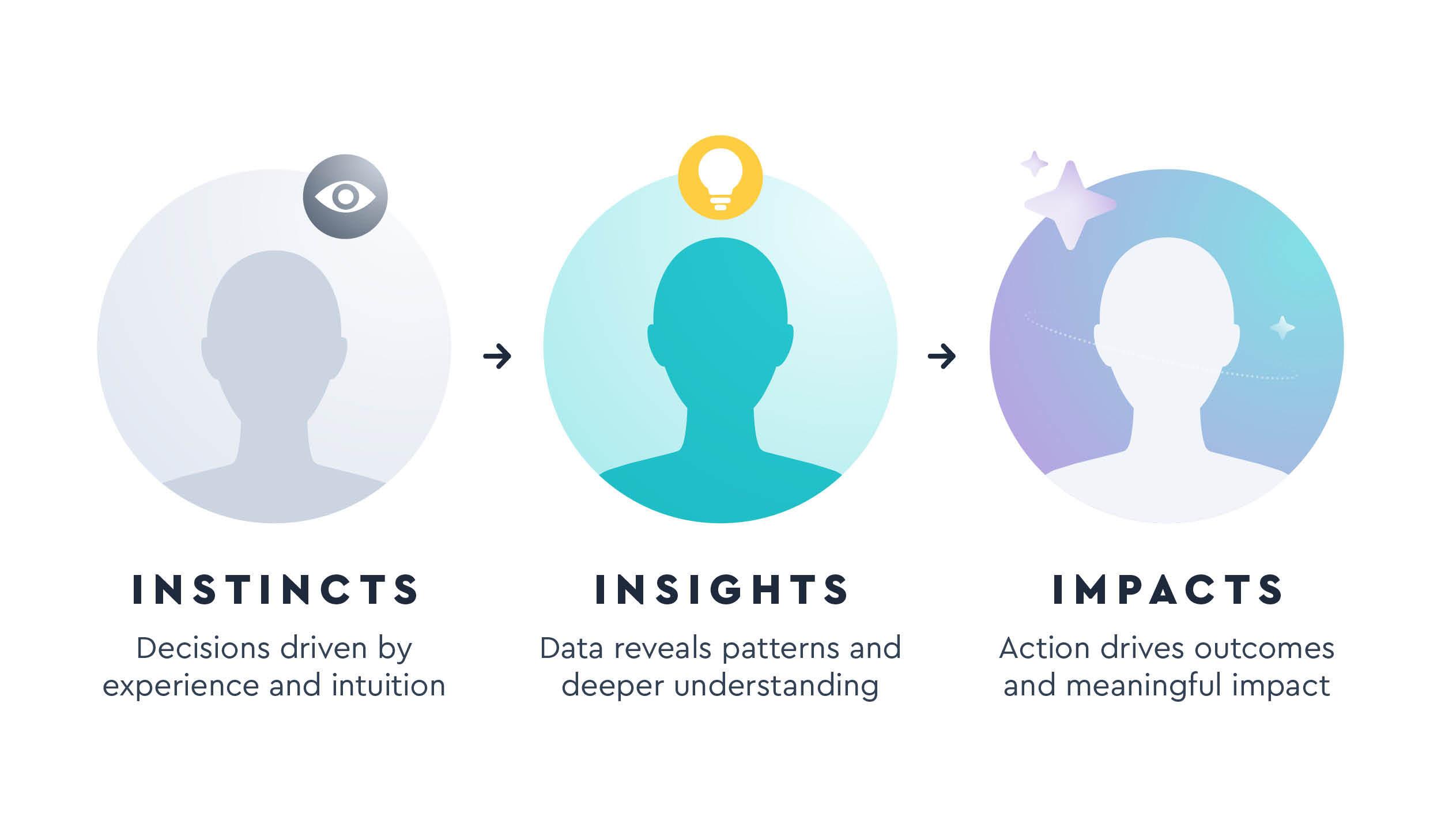
AI changes the mission of people analytics teams in ways that are still sinking in. It makes insights faster to produce and easier to interpret. It extends the reach of analytics to audiences that would never have sought it out before. A finding that used to require weeks of preparation and a willing executive sponsor can now reach a line manager on the surface of their daily work.
The challenges that consumed so much of the profession's energy do not disappear with AI (we’ll still be helping others understand how they can surface insights from people data), but visibility and data democratization is exponentially faster and easier. This leaves the PA profession open to do more.
Now that we can more readily bring people to the data they need, the question is how we can more effectively embed workforce intelligence where the decisions are already being made.
Therefore, the people analytics profession must make 2 critical transformations:
Transform into something larger: Workforce Intelligence
Change its north star from Insight to Impact. These are connected but distinct.
Evolving people analytics into Workforce Intelligence is a change in scope. People analytics, as it has been practiced, is largely defined by the data HR knows: headcount, turnover, engagement, and performance. That data is valuable, but it is also incomplete.
For an enterprise to successfully navigate our new AI-driven economy, it has to understand work itself: what gets done, how it gets done, which tasks are genuinely human and which are candidates for automation, and what the culture of incentives and relationships looks like around all of it.
Enterprises also have to expand their definition of the workforce to include not just people, but the agents now operating alongside them. The systems of work are changing. The data that describes those systems has to change with them.
Shifting the conventional north star from insight into impact is a change in ambition, because insight was always a means to an end. We’ve used insights to drive better decisions, better outcomes, and a workforce that is genuinely prepared for what the business is trying to build.
The profession has always understood this, but what it lacked were the tools to close the gap between knowing and doing. Yet, now for the first time the tools exist to act on this ambition for impact much more explicitly.
Workforce Intelligence closes ambitions of insight into the reality of impact. Here are five ways:
Most organizations are still treating AI adoption as a technology rollout rather than an organizational design problem. AI doesn't create value by sitting in a technology stack. Instead, it creates value when work is deliberately redesigned around it.
Workforce Intelligence gives CHROs the data to identify which roles are most exposed to automation, which capabilities are becoming scarce, and where organizational structure is blocking AI from delivering its potential. This is an ongoing discipline, and the capabilities of the People Analytics function is critical.
Designing and planning the workforce only matters if the organization follows through—and most HR functions lack the operating rhythm to make that visible. Finance solved this problem decades ago. Every CFO tracks the gap between actual and plan in real time, on a cadence that doesn't wait for the annual review.
Now, Workforce Intelligence gives HR the same capability: real-time accountability for talent decisions. It gives managers the signal they need to act before a retention risk becomes a departure, before a capability gap becomes a strategic liability, before the organization falls behind the plan it set out to execute.
The Dave Ulrich’s tiered service model (opens in a new tab) that has governed HR for three decades optimized for cost and standardization, and it largely succeeded. What it never truly unlocked was intelligence at scale.
Workforce Intelligence, delivered through a modern service architecture, breaks down the silos that have always limited HR's coherence. The result is every agent, every HR system, and every employee interaction working from the same full context.
A coaching agent that knows an employee's skills profile, reporting structure, and gap to plan gives fundamentally different guidance than one that doesn't. That is a brand new model of what HR service can look like.
The traditional headcount-and-FTE plan was built for a world where people were the only variable. That world is gone.
Workforce Intelligence enables planning across multiple dimensions simultaneously: people and agents; near-term cost and long-term capability; and competitive scenarios rather than last year's baseline.
That kind of workforce planning gives leaders a genuine roadmap for decisions. It connects investment in talent to the competitive position the business is trying to build.
The managers who most need HR's intelligence are rarely the ones who come looking for it. They are running teams, making daily talent decisions, and absorbing workforce risks that never surface as formal HR conversations.
Workforce Intelligence, when embedded in the systems where those managers already work, reaches them anyway. As AI creates a world of systems-to-systems interaction (opens in a new tab), the wisdom inside a well-designed workforce plan can flow into every corporate system that touches people decisions: finance, operations, and the growing ecosystem of agents running alongside them.
For those of us who have spent the last fifteen years arguing that people data matters, this is a satisfying but humbling moment. The argument has been won. But winning the argument was never the point. The point was always impact. Now, what comes next is harder and, arguably, more important: actually using this new intelligence to change things.
This reimagining of people analytics means expanding scope from just HR data to Workforce Intelligence. It means shifting ambition from producing insights to driving outcomes. And it means moving at a pace the business actually needs, not the pace HR has historically been able to offer.
The north star is shifting for those of us in people analytics, from Insight to Impact. The foundation is built. Now it's time to use it.
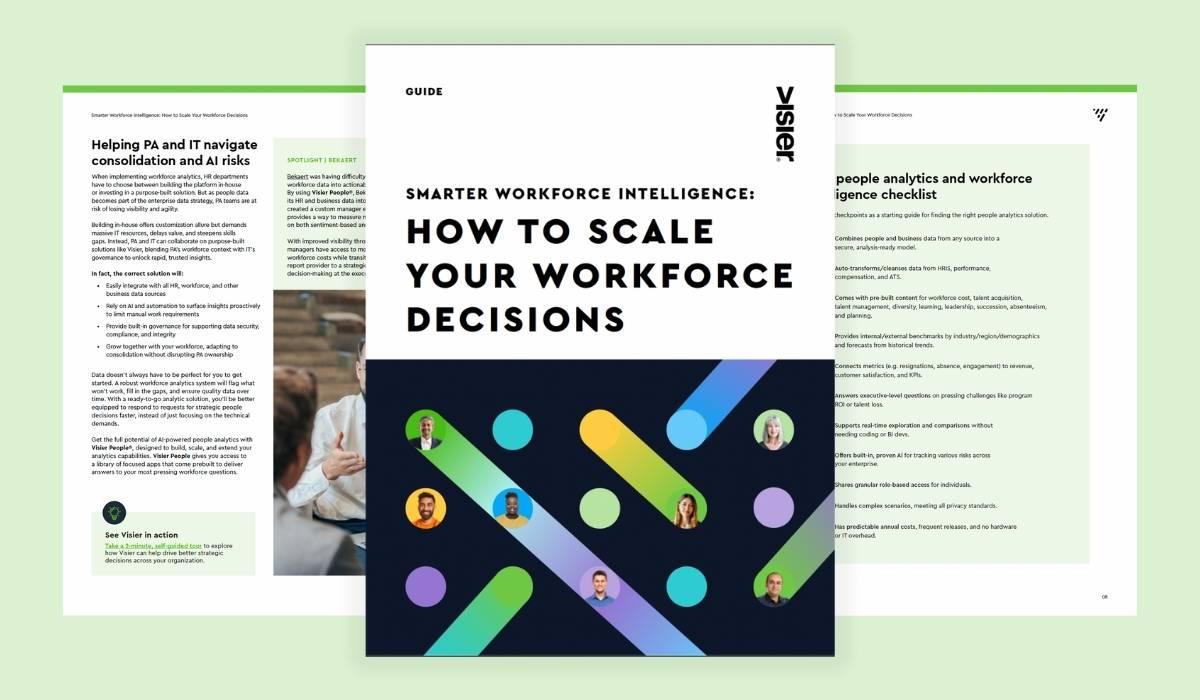
See how Smarter Workforce Intelligence is your practical guide to scaling people analytics and driving decisions that matter.