Report
Beyond the AI Hype: 3 Trends Reshaping the HR Tech Stack in 2027
Published:
Succession planning tools show which critical roles are exposed, who’s ready to step in, and where to build out your team before someone walks out the door.
· 12 min read

Workforce intelligence helps you create stronger succession plans. Learn how the right succession planning tools can help you catch, close, and prevent talent gaps across your organization.
When a key leader or someone in a critical role unexpectedly leaves, this is the worst time to realise that you don’t have a succession plan in place.
Yet, given the implications for business continuity and the massive cost of last-minute external hiring, you'd be shocked how many orgs lack the tools to stay ahead of these risks. In fact, 78% of the large companies Visier surveyed in its 2026 research told us they still run their talent programs without a dedicated, purpose-built talent management system.
Succession planning tools are essential for talent managers in order to spot those critical-role coverage gaps, evaluate the readiness of internal candidates, and track how their talent pipelines change over time.
This guide covers what succession planning tools are, the features that matter, and how to build a succession plan with the data they deliver.
Succession planning tools are systems and software that help organizations map their critical roles, evaluate potential successors, and prep the best-fit employees to fill upcoming vacancies.
They range from simple talent-mapping templates to full-fledged enterprise platforms that combine workforce data, readiness assessments, and succession risk monitoring to facilitate high-level talent decisions.
Most succession planning tools fall into one of five buckets:
These are spreadsheets and visual frameworks HR teams use to map employees by their performance, succession potential, and readiness for future roles. They're useful for basic succession planning, but because they rely heavily on manual data entry and subjective assessments, they're less practical at scale and for data-driven strategic decisions.
Talent assessment tools use structured assessments to evaluate employees' competencies and leadership potential. This gives you more objective evidence for successor selection. However, it still won't necessarily show you how candidates fit into your broader workforce strategy.
Dedicated platforms let HR identify successors, track readiness, manage talent pools, and coordinate development plans in one place. It's scalable, but as a standalone tool, it can create operational friction if it doesn't automatically pull live data from your HRIS, LMS, and performance management tools.
These add succession planning capabilities to your existing HR management system; they connect succession decisions to employee records, performance reviews, and development activities. This significantly reduces the amount of fragmented data across the employee lifecycle, which, again, is one of the biggest hurdles to making an effective succession decision.
Workforce intelligence platforms add a predictive analytics and scenario planning layer to your workforce data.
Enterprises need this depth because succession decisions rely on data from multiple systems. These platforms bring in real-time behavioral and payroll signals that standalone tools can’t access, then analyze your workforce as a whole to show:
Which critical roles are most vulnerable
Who has the potential to fill them
What development and hiring decisions will close those gaps
The most important features to prioritize in a succession planning tool are:
Succession benching: Identify and compare potential successors for each role, plus backup candidates if your first choice becomes unavailable.
Readiness tracking: See who's ready to step up now, who could be ready in one to two years, and what development each candidate still needs.
Bench strength by role: Measure how many qualified successors you have for each critical position. This helps you prioritize roles where there's little or no internal coverage.
Flight-risk signals: Spot early indicators that key employees or potential successors might leave, so you can address retention risks before they become succession gaps.
Skills data: Compare employees' existing skills against what the future role requires to uncover qualified candidates you might otherwise overlook and zero in on broader development gaps.
Career path mapping: Visualize potential career moves and feeder roles to see where your future leaders will come from and what you can do to prepare them.
HRIS integration: Connect succession planning with your broader workforce data so decisions reflect current information without constant manual updates.
There are three common talent management processes that, when managed effectively, significantly reduce potential risks associated with the loss of individuals in critical roles within the organization:
Succession planning: Identifying the positions and employees most critical to business operations, then determining who could step into those roles when vacancies arise.
Talent reviews: Structured evaluations of employees' performance, potential, and capabilities to assess their suitability for future positions.
Career pathing: Helping employees explore internal opportunities, set development goals, and build the skills and experience needed to advance their careers.
For instance, talent reviews help you identify promising successors, succession planning reveals how prepared they are to fill critical roles, and career pathing gives them a clear route to get there.
Each serves a different purpose, but they're most effective when supported by talent management and succession planning software that connects the data behind them.
Having a succession plan is one thing. But how do you know whether it's actually working?
Good succession planning software gives you visibility into three important things:
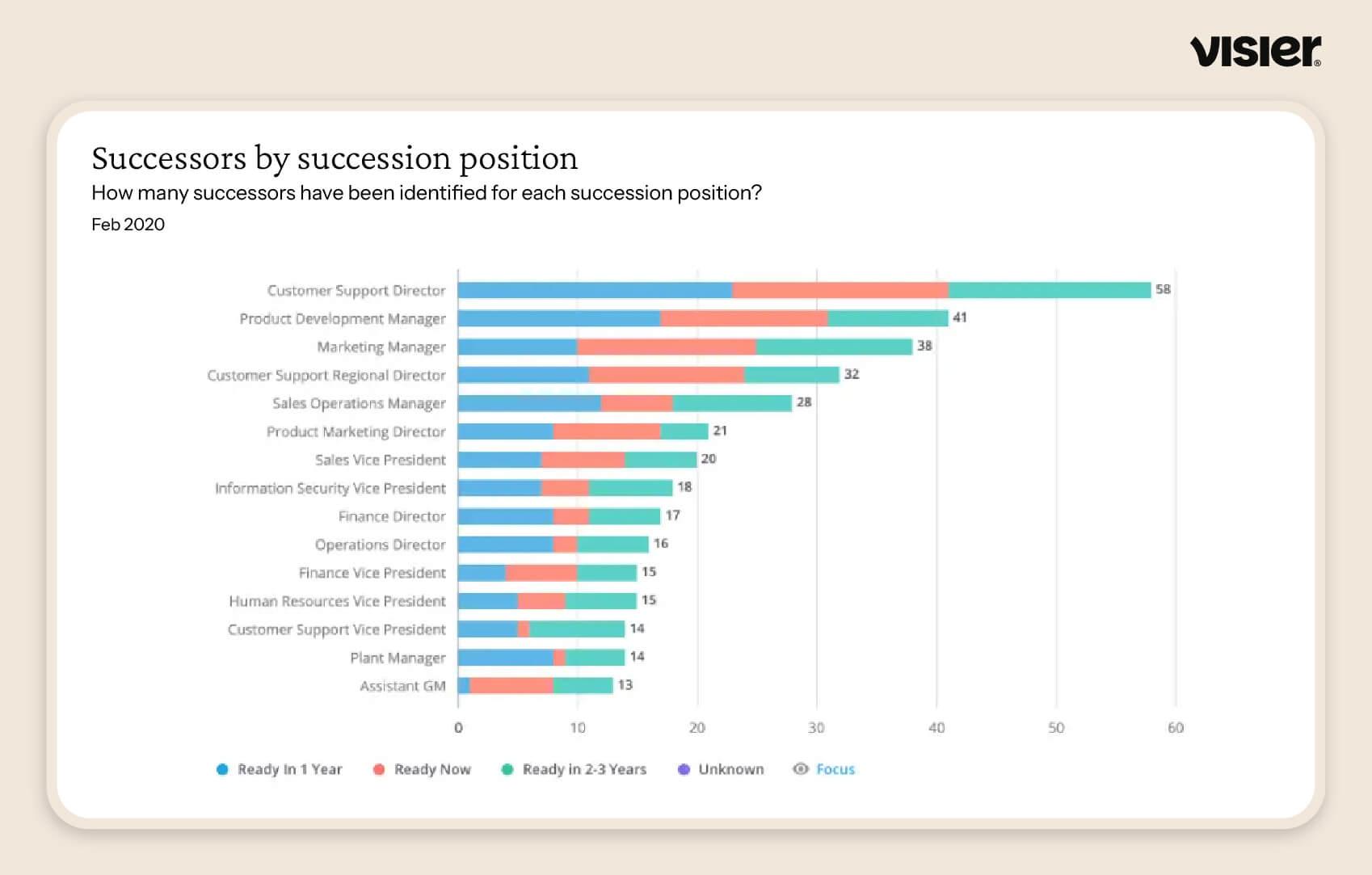
What you need to answer: Do you have enough qualified successors for each critical role? And are any of those successors approaching retirement themselves?
Start by measuring your bench strength by position, making sure to factor in how many candidates are ready now versus those who need another year or two of development.
Then, look at the long-term viability of that pipeline. If several candidates for the same position are nearing retirement, your bench might be thinner than it initially appears.
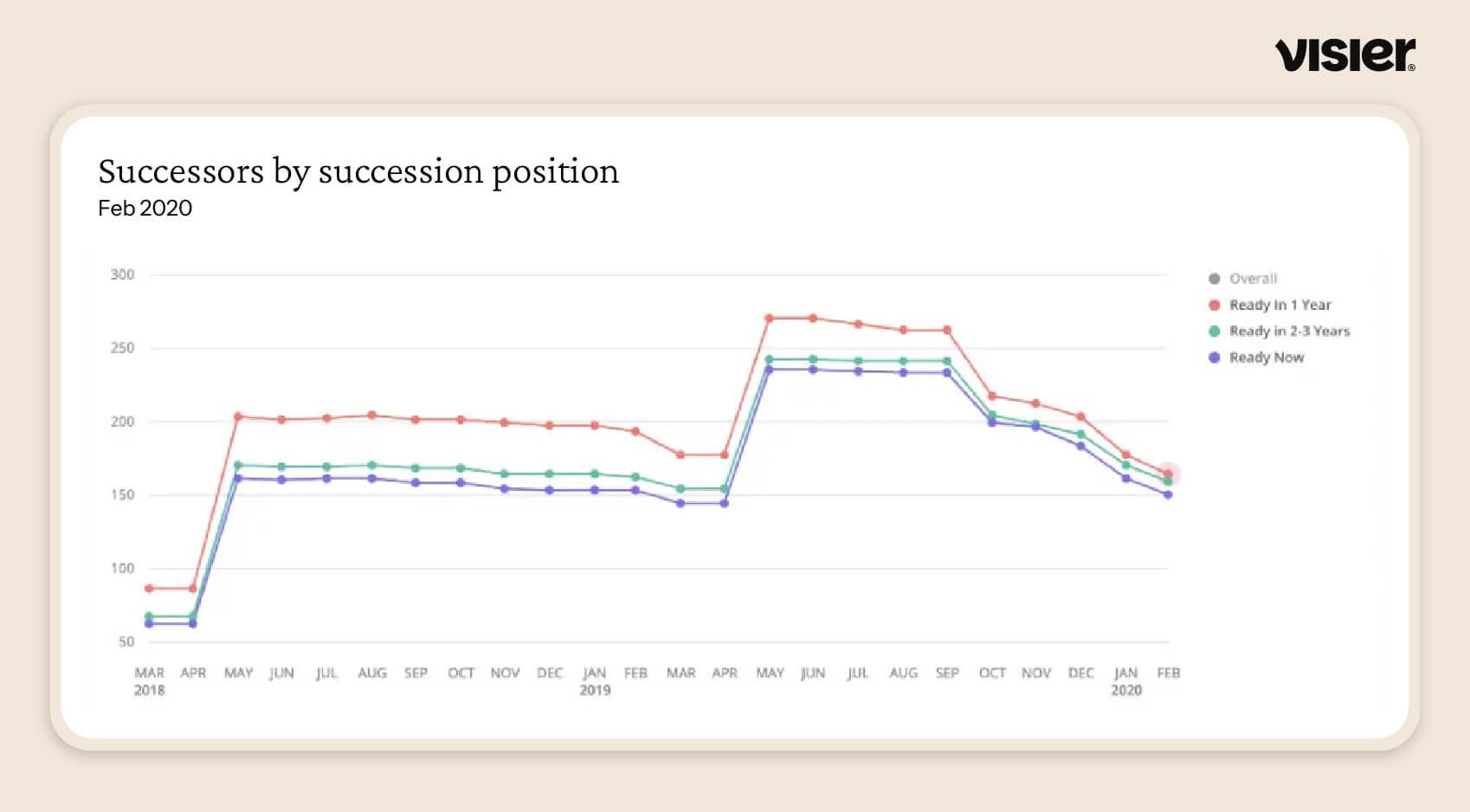
What you need to answer: Are your development plans actually preparing employees for succession? And are ready-now candidates moving into those roles?
Track how candidates progress between readiness levels over time. Let’s say you had 150 candidates expected to be ready in two years; you'd expect a meaningful portion of them to be within one year of readiness by the next review.
If that isn't happening, look at where they're falling behind and whether their development plans are addressing the right skills and experience gaps.
Another important measure of the success of the program is how many ready-now successors are actually moving into those succession positions.
If your people are ready to move into positions of greater responsibility, yet are not seeing career progression, this may result in an increased risk of unwanted turnover. Visualize time-since-promotion data in addition to candidate readiness:
What you need to answer: Are you identifying qualified talent across your workforce and giving employees equitable access to development and advancement opportunities?
Analyze the representation of different employee groups within your succession slates. This also includes gender and ethnicity (where that data is available and appropriate to use).
Compare that representation across roles, departments, and leadership levels.
This also typically includes ethnic diversity; your pipeline might show balanced gender representation but significant gaps in ethnic representation.
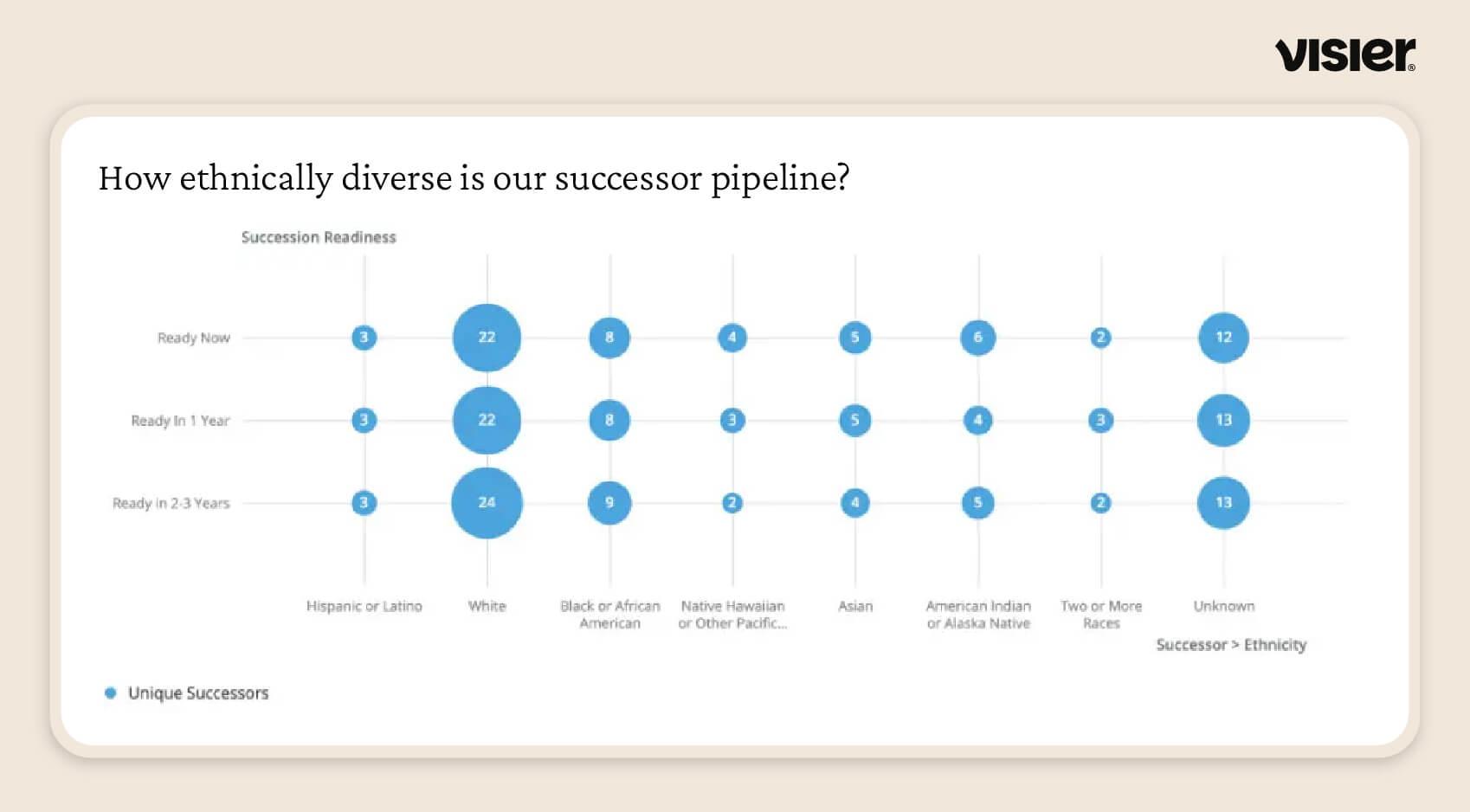
These insights help you spot where your talent identification and development processes could be overlooking qualified employees, so you can address those gaps before they carry over into future leadership appointments.
It’s also one powerful way workforce intelligence can support your company’s broader DEI goals.
Workforce analytics give you an evidence-based way to assess employees' performance, potential, and readiness for future roles, helping you make more informed succession decisions.
So now, let's dive into how you can use that data:
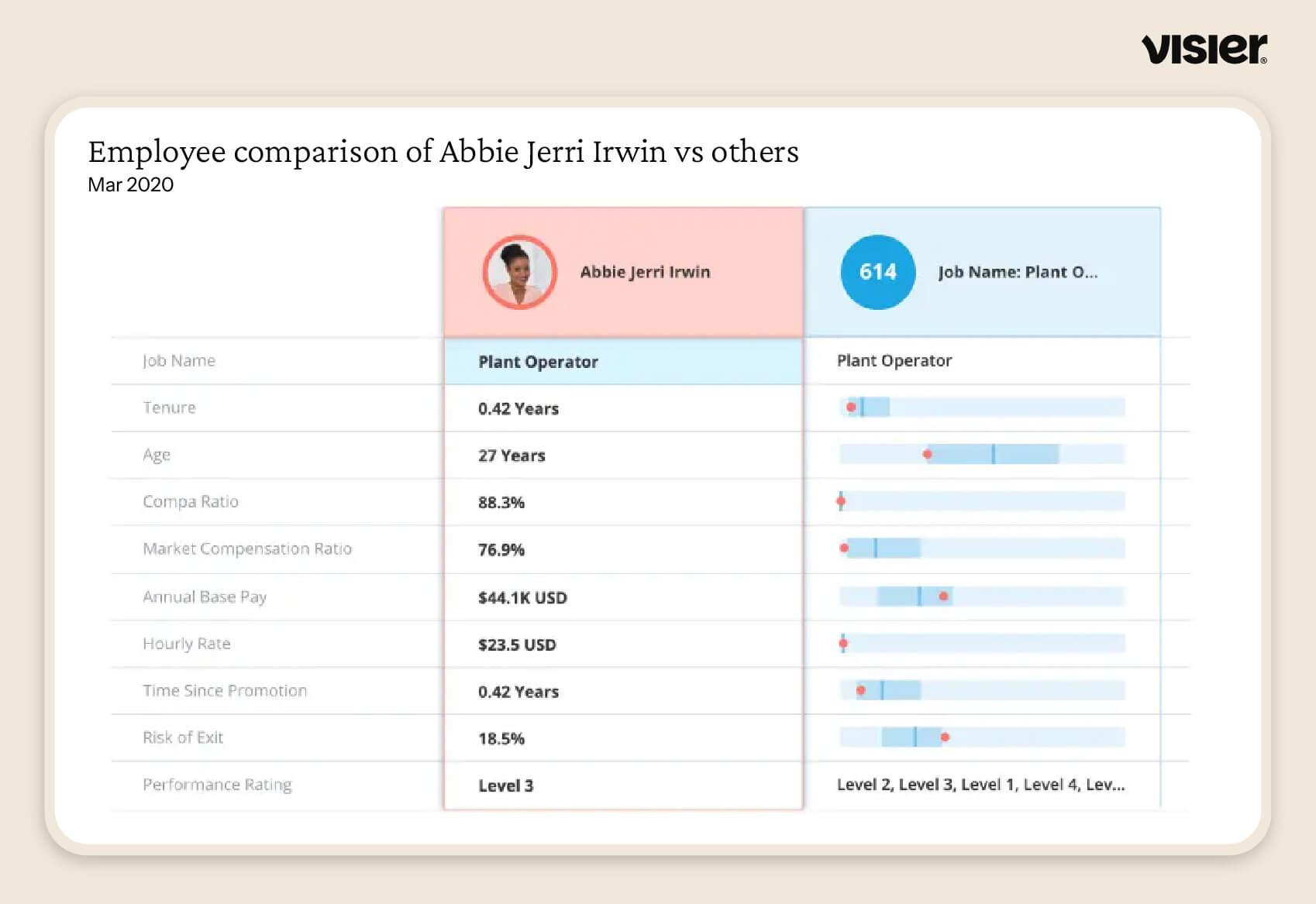
What you need to answer: Are your high-potential employees at risk of leaving? How do they compare to others in similar roles?
When you compare compensation, performance, tenure, and flight-risk indicators against peers in the same role, it's possible to see potential retention concerns and make better-informed decisions about employee development and career progression.
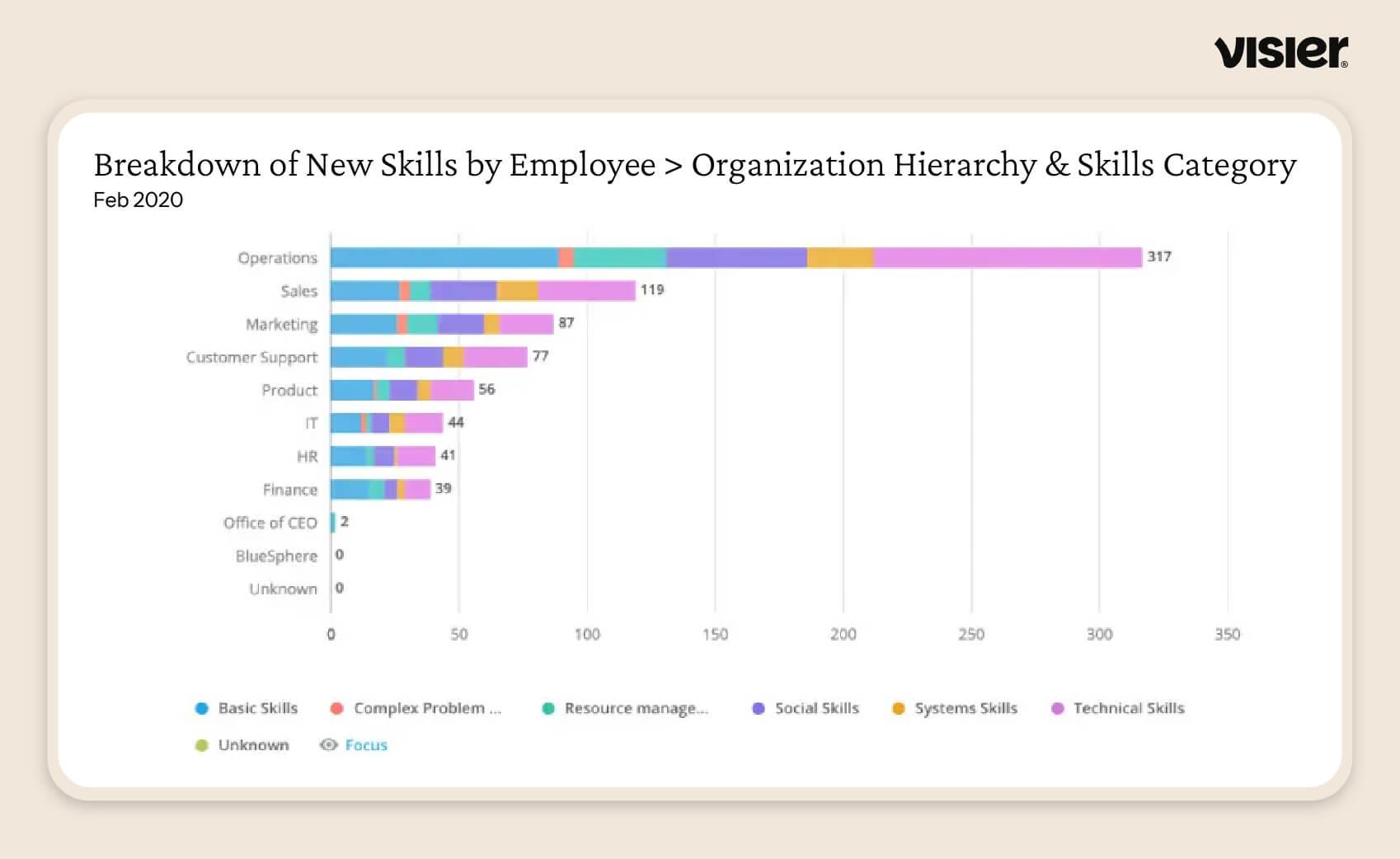
What you need to answer: Which critical skills are missing, and which employees already have them?
Skills analytics reveal capability gaps across departments and help you identify employees who could fill them.
This becomes especially important as AI changes the skills different roles require. To build AI-ready teams, you need to understand which capabilities your workforce already has, which will become more important, and how you can close those gaps with targeted development and hiring.
What you need to answer: Which employees have leadership potential but aren't currently on your succession radar?
Someone who regularly connects teams, shares expertise, or helps colleagues solve problems might have leadership potential that traditional performance reviews overlook.
Organizational network analysis (ONA) helps you identify those informal leaders and influential employees by analyzing collaboration patterns and workplace connections.
These insights give you additional candidates to evaluate. They eliminate potential bias by helping you look beyond the employees managers already know and recommend.
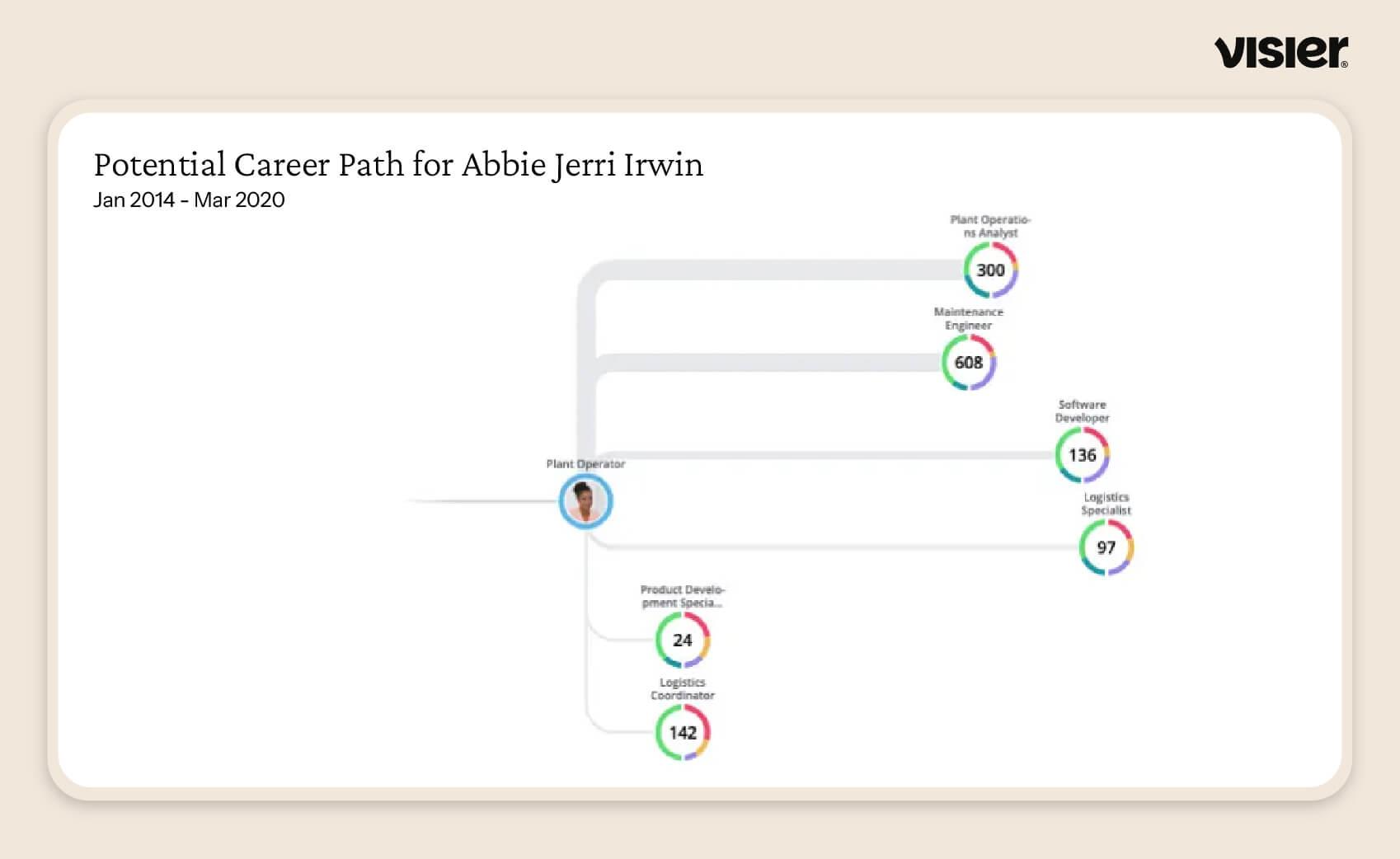
Identifying a promising successor is only half the job. You also need to give them a realistic path to the position you're preparing them for, and make it easy for them to visualize.
Career pathing analytics show how employees have moved between roles, which helps managers identify potential career moves beyond traditional promotions.
You can also work backward. By analyzing the roles that employees previously held before moving into a critical position, you can identify potential successors in departments or job families you might not have considered.
Using succession planning software, the process starts with identifying where your organization is most vulnerable, then using workforce data to find and develop the right people to fill those gaps.
Here are the five steps to follow when building your succession plan:
Not every vacant position poses the same risk to your business. Start with the roles that are both critical to your operations and difficult to replace.
Ask yourself:
What's the cost of mistakes in this role?
How difficult would it be for us to replace someone in this position?
How closely is this role tied to our business goals?
Use your workforce data to identify which of these positions face the greatest vacancy risk, factoring in retirement eligibility, turnover patterns, and the availability of internal replacements.
Once you've identified your critical roles, use performance, potential, and readiness data to shortlist possible successors.
Look beyond your current high performers. Career history and skills data reveal employees who've successfully moved between departments or demonstrated leadership potential outside their current roles.
Compare the candidates against each critical position's requirements to see who has the potential to step in.
Now you need to determine how prepared those candidates actually are.
Use succession planning software to classify successors by readiness (ready now, ready in one year, ready in two years) and measure how many qualified candidates you have for each critical role.
Now you know where you already have enough coverage and where you need to accelerate development or think about external hiring.
Once you've identified successors for your most critical positions, you can focus on developing the next wave of talent.
Analyze skills, certifications, and performance data to find people who could move into future succession pools. You can also identify opportunities to redeploy people from departments with excess capacity into areas with greater talent demand.
This helps you maintain bench strength as employees move into new roles.
Your succession candidates might have the potential to fill a critical role, but they'll still need the right experience to succeed.
Short-term assignments and cross-functional projects give employees opportunities to build and demonstrate the skills they'll need for the role you envision them in.
You can also use career history data to see who's previously held those positions and connect them with successors for mentorship and knowledge transfer.
Then, track succession candidates' progress against their development goals to see who's getting closer to being ready.
Traditional succession planning gives you a snapshot of who's ready to step into an important position. AI-powered succession planning tools give you the power to anticipate well ahead of time how that picture might change.
AI is able to analyze organizational skills, individual performance history, and career movement all together, then surface potential successors (including those you might otherwise overlook).
Predictive AI models also highlight employees most likely to leave and explain the factors driving that risk. By comparing your workforce's existing skills with each role’s changing requirements, they surface future skills gaps so you can prepare ahead of time.
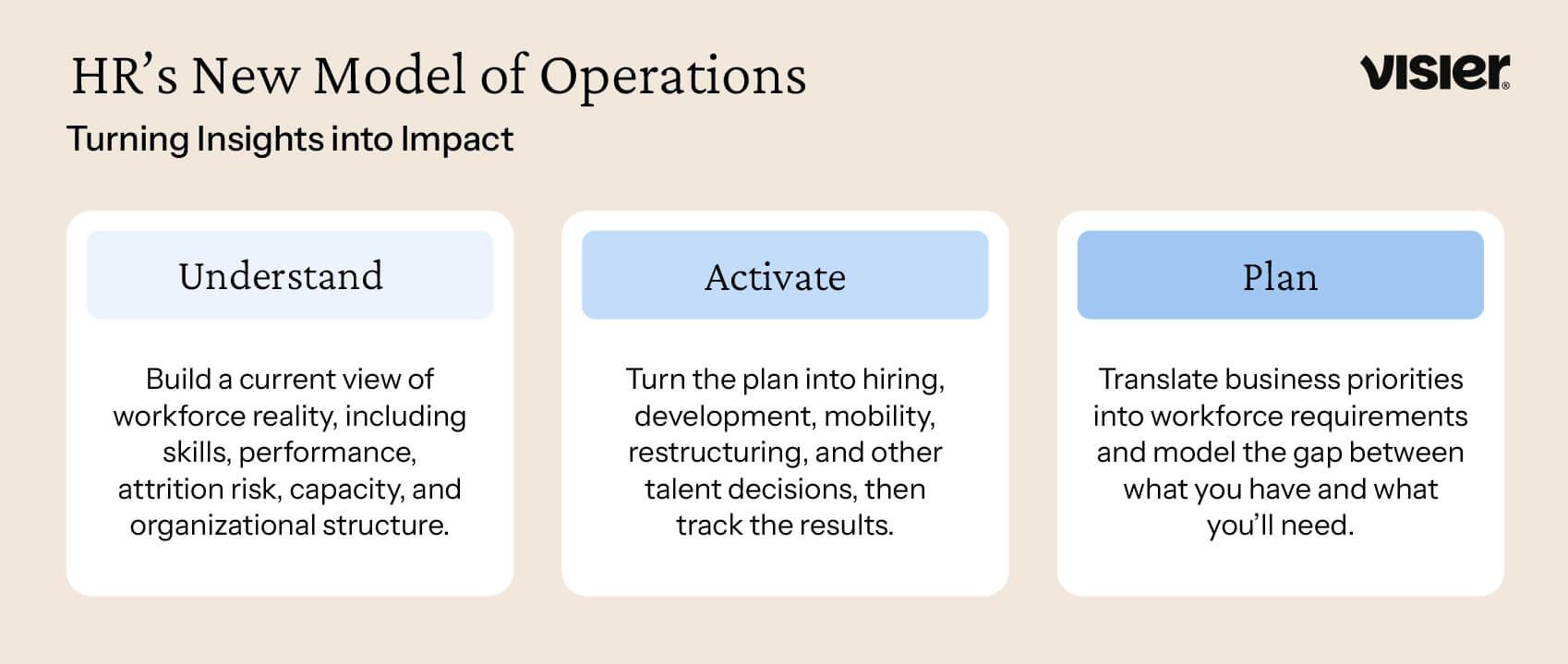
With Visier Workforce Planning, you can model those options against your current workforce supply, future skills requirements, and financial constraints.
Visier Talent Agents then turn those plans into action by continuously monitoring talent signals {like what} and delivering personalized guidance to managers, then tracking whether their actions truly strengthen your succession pipeline.
Take Experian: the multinational consumer credit reporting agency used Visier to identify high-potential middle managers on track for senior leadership and develop succession plans that accounted for their resignation risk. The company also reduced its reporting workload by 70%, which freed HR to spend more time on strategic talent initiatives.
And that's the biggest change AI brings: succession planning becomes an ongoing, measurable process, with software doing the heavy lifting and human decision-makers free to focus on higher-value work like developing future leaders, strengthening retention, and building a workforce that's ready for what's next.
See what’s next for your talent strategy. Download Visier Insights: Beyond the AI Hype: Workforce Trends That Will Define 2027 for the workforce shifts HR leaders need to plan around.
Maybe you can’t prevent every unexpected departure, but you can make sure you're prepared for one.
With the right succession planning tools, you'll know where your leadership pipeline is vulnerable, and what you need to do to develop the next generation of talent.
Visier gives you the workforce intelligence to make those decisions confidently, with connected data and predictive insights. Explore the Talent Transformation Hub for practical resources on connecting succession planning, employee development, and retention to measurable business outcomes.
Succession planning tools are frameworks and software that help organizations map critical roles, evaluate potential successors, and prepare the best-fit employees for upcoming vacancies. They range from templates and 9-box grids to workforce intelligence platforms that combine workforce data, readiness assessments, and succession risk monitoring.
Succession planning tools is the broader term. It covers templates, 9-box grids, and talent assessments, as well as software. Succession planning software is one type: a platform that tracks readiness, bench strength, and development plans in one place, ideally pulling live data from your HRIS.
Look for succession benching, readiness tracking, bench strength by role, flight-risk signals, skills data, career path mapping, and HRIS integration. Together, these show who can fill each critical role, how ready they are, and who might leave before you need them.
The five steps are: identify business-critical roles, assess and select successors, measure readiness and bench strength, refill your succession pipeline, and provide training, mentorship, and stretch assignments.
Start with roles that are both critical to operations and hard to replace. Ask what a mistake in the role would cost, how difficult the person would be to replace, and how closely the role ties to business goals. Then use workforce data to flag the roles with the greatest vacancy risk, based on retirement eligibility, turnover patterns, and available internal replacements.
Track the strength of your pipeline (qualified successors per critical role), how quickly candidates progress toward readiness, and whether ready-now successors are actually moving into roles. Also watch the internal fill rate for critical roles and regrettable attrition among key talent. Representation across your succession slates shows whether you’re overlooking qualified people.
For a small team with a few critical roles, yes. Excel and 9-box grids can map successors and readiness. But they rely on manual, subjective data, go stale quickly, and can’t pull live performance, skills, or flight-risk signals. As roles and headcount grow, purpose-built software keeps the picture current.
AI analyzes skills, performance history, and career movement together to surface successors you might otherwise overlook. It predicts which employees are most likely to leave and explains why, and it flags future skills gaps as role requirements change. With Visier Talent Agents, this monitoring runs continuously instead of once a year.