
Blog
What Is Workforce Context? The Missing Layer Between AI and Your People Data
Published:
· 15 min read

Recently, I attended HR Tech and several other People Analytics-based conferences, and there was a dominant theme among those conversations: workforce context. There is widespread consensus that context is important (would a number by any other definition smell as sweet?), but the attendees I spoke with were looking for an explicit list of examples of why context matters.
How could workforce context, or lack thereof, impact their organizations? How are HR teams gathering, validating, and scaling that context?
For those trying to unpack just when and how context matters, I’ve pulled together 21 real-world examples of HR metrics to demonstrate just how much workforce context matters.
Workforce data rarely has only one valid definition. The same term can mean different things depending on the business question, the population being analyzed, the time period, the source system, the action that follows, and even who is asking the question.
Workforce context gives that data the structure to keep its meaning. It rests on four elements:
Temporal continuity: A single timeline that separates when an event happened from when it was recorded, so you can see the workforce as it actually was at any point in time.
Organizational relationships: Reporting lines, teams, and cost centers captured as they existed at the time, so past events, reviews, and budgets stay tied to the right managers and teams through every reorg.
Governed delivery: Dynamic access rules that check role, permissions, and data sensitivity on every query, so people and AI agents see only what they’re authorized to see.
Semantic consistency: One shared definition for core metrics like headcount, turnover, and active employees, so every department calculates them the same way.
Of course, these workforce context hiccups are nothing new, but they are getting exponentially worse as workforce data gets thrown into general-purpose LLMs. When someone on the team asks ungoverned AI agents workforce questions, the answer might sound accurate, but is it?
The answers carry no lineage, no record of which data they drew on, which definition they applied, or what the org looked like at the time.
An indefensible answer from an LLM calls your expertise into question and, worse, can lead to costly workforce decisions based on wrong answers.
It can help to see why workforce context matters with illustrative examples drawn from everyday business and HR realities. Each one shows why teams need workforce context, and how a technically accurate metric can still lead to the wrong decision.Let this serve as a starting point to demonstrate how technically accurate metrics can still produce the wrong insight when the right context isn’t provided during analysis.
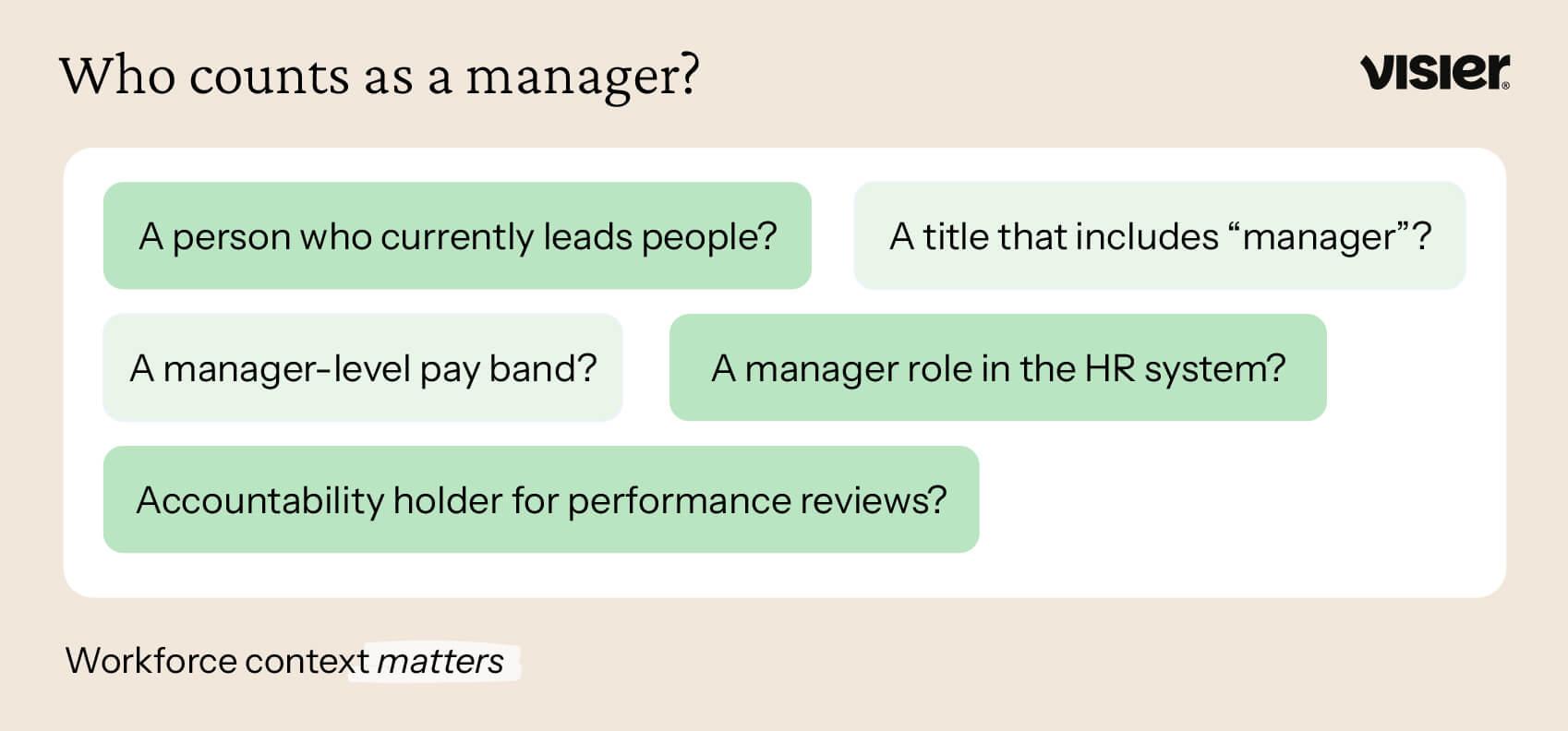
What are the possible definitions? Someone who currently leads people; someone whose title includes “manager”; someone in a manager-level job or pay band; someone assigned a manager role in the HR system; or someone with formal accountability for performance reviews.
Why does it matter? The manager population feeds dozens of workforce metrics, from span of control to manager effectiveness, and it’s the first group leaders look at when they plan leadership development.
What’s the business impact? An L&D leader planning a leadership course needs today’s people leaders, not everyone with a manager title or pay band. Get that wrong, and the budget goes to the wrong employees, while the people who actually manage teams miss out on the training they need to improve manager effectiveness.
What are the possible definitions? Start date is offer acceptance; the agreed employment start date; the first day the employee is actively working; or the first day the employee is physically onsite.
Why does it matter? Start date sets the clock for time to fill, onboarding tasks, and first-day readiness, so recruiting, HR, IT, facilities, and the hiring manager all depend on it.
What’s the business impact? Recruiting may track time to offer acceptance, but IT needs the day the new hire actually starts. If IT goes by the offer date, the laptop, accounts, and building access can be set up too early, or not be ready at all when the employee logs in on day one.
What are the possible definitions? Someone currently on payroll; someone who has not reached their termination date; someone actively working (gig, contingent, non-permanent, temporary, co-ops, or interns); or someone on paid leave who remains employed.
Why does it matter? Active status sets the base population for headcount, capacity, benefits eligibility, and compliance reporting, so every downstream metric inherits this definition.
What’s the business impact? Including employees on extended leave can overstate available capacity, while excluding them from benefits or compliance reporting can understate the employee population. A benefits open-enrollment campaign needs to reach everyone who is still employed, including people on paid leave, while a capacity plan for next quarter should only count the people who are available to work.
What are the possible definitions? Number of people; number of positions; full-time equivalents; or employees counted at a point in time versus averaged across a period.
Why does it matter? Headcount is the denominator behind most workforce metrics, including turnover, span of control, and cost per employee, so a small difference here spreads everywhere.
What’s the business impact? Finance may count full-time equivalents when it builds a salary budget, while a manager planning one-on-ones or a team offsite just needs to know how many people are on the team. If you don’t know who counts within this metric, staffing plans, productivity comparisons, and budgets all start to drift.
What are the possible definitions? An approved requisition; a posted job; a role with an accepted offer but no start date; or any position that is not currently filled.
Why does it matter? Vacancy counts drive recruiting workload, hiring budgets, and capacity forecasts, so they shape how both recruiting and Finance plan the months ahead.
What’s the business impact? A recruiting team setting priorities needs approved requisitions that don’t have an accepted offer yet, while Finance forecasting salary spend needs every unfilled position. Count an accepted offer as an open vacancy, and recruiting looks slower than it is, while leaders may keep hiring for a role that’s already filled.
What are the possible definitions? Anyone who leaves for any reason, including retirements or layoffs; voluntary resignations only; regrettable resignations; employees leaving within a specific amount of time; or turnover calculated using ending headcount versus average headcount.
Why does it matter? Turnover is one of the most closely watched workforce metrics, and leaders use it to decide where to invest in retention.
What’s the business impact? Count retirements and layoffs in a voluntary-retention analysis, and leaders may end up fixing the wrong problem. A CHRO explaining to the board why people are quitting needs voluntary resignations, while a workforce planner forecasting backfills needs every departure.
What are the possible definitions? Employees rated highly; employees in critical roles; employees with scarce skills; employees identified by leaders as difficult to replace; or a combination of these.
Why does it matter? This definition decides who gets prioritized for retention efforts, counteroffers, and succession planning programs.
What’s the business impact? A retention program based only on performance ratings may miss an employee with rare technical expertise (COBOL, anyone?), while a program based only on manager nominations may reproduce inconsistent or biased judgments.
What are the possible definitions? Someone nominated by a manager; someone in a formal talent pool; someone with high performance and future-readiness scores; or someone who meets a defined career-level or capability threshold.
Why does it matter? A high potential label determines who gets access to development programs, stretch assignments, regrettable loss flags, and succession slates, which makes it one of the most consequential labels in talent management.
What’s the business impact? A succession review for VP roles needs people who are both ready and willing to lead, and that list can look very different from the one managers nominate each year. Get it wrong, and a leadership program fills up with strong performers who don’t want to manage, while people with real leadership potential are overlooked because no one nominated them.
What are the possible definitions? A change in job level (one level or more than one level); a change in title; a pay increase; movement to a role with greater scope; or any internal move into a more senior position.
Why does it matter? Promotion rates are used to assess career progression, pay equity, and whether talent programs are working.
What’s the business impact? If one department records level changes as promotions and another records title changes, promotion rates stop being comparable, and a team can look stalled when it isn’t.
What are the possible definitions? The latest performance rating; an average rating over several cycles; goal attainment; productivity; sales results; customer outcomes; or manager assessment.
Why does it matter? Performance data feeds compensation, promotion, and exit decisions, so it shapes how people are paid and who moves up.
What’s the business impact? Compare ratings across roles without accounting for targets, territory, role complexity, or how different managers rate, and you can misjudge who your top and bottom performers really are, which then flows into pay and staffing decisions.
What are the possible definitions? Any missed scheduled time; unplanned absence; approved leave; sick time; disability leave; parental leave; or time away excluding holidays and scheduled vacation.
Why does it matter? Absence rates shape staffing levels, shift schedules, and well-being programs, so operations and HR both lean on them.
What’s the business impact? An operations manager scheduling next month’s shifts needs unplanned absence, while a well-being team looking for signs of burnout needs trends in sick time and disability leave. Lumping planned vacation in with unexpected absence and a location can look unreliable, leading to staffing changes it doesn’t need.
What are the possible definitions? Time since the most recent hire date; time since the original hire date; time in the current role; time with the company, including prior service; or time since a rehire or acquisition.
Why does it matter? Tenure shows up in retention, compensation, and onboarding analysis, and it often decides who qualifies for programs and service awards.
What’s the business impact? A rehire can be brand new for onboarding purposes but a long-tenured employee for retention analysis, so one definition can’t answer every question. An onboarding program should count from the most recent hire date, while a service-award program needs total time with the company, including prior service and time carried over from an acquisition.
What are the possible definitions? Any movement between roles; movement between departments; promotion only; lateral transfer; temporary assignment; or a move that includes a location change.
Why does it matter? Mobility rates show whether employees can grow inside the organization and whether talent is moving to where the business needs it.
What’s the business impact? A CHRO reporting on career growth may want promotions and lateral moves, while a redeployment program during a restructuring needs every move between departments and locations. Count only promotions, and mobility looks low, but count every job-code change, and it looks higher than it really is.
What are the possible definitions? A skill listed in a profile; a skill validated by assessment; a credential; experience inferred from work history; or a capability required by a job.
Why does it matter? Skills data increasingly decides who gets staffed on projects, who gets hired, and where learning dollars go.
What’s the business impact? Staff a critical project on self-reported skills alone and you take on delivery risk, but rely only on formal certifications, and you leave out experienced people who learned on the job.
What are the possible definitions? Same job title; same job family and level; similar work, scope, location, and experience; or employees grouped by a statistical model.
Why does it matter? The comparison group determines whether a pay gap shows up and whether the analysis holds up to legal and regulatory scrutiny.
What’s the business impact? Compare only by title, and you can miss real differences in scope, but group too broadly and you can hide gaps that deserve a closer look. A compensation team answering one employee’s pay concern needs peers doing similar work at a similar level and location, while a regulatory filing has to follow the groupings the regulation sets out.
What are the possible definitions? All employees; employees who voluntarily self-identify; employees with known demographic data; employees in a country where a category is legally collected; or employees in a specific job level or talent process.
Why does it matter? Representation metrics are reported to boards, regulators, and the public, and the denominator you choose shapes the number they see.
What’s the business impact? A board report on leadership representation needs the same denominator year over year, while a country-level compliance filing has to follow local rules on what demographic data can be collected. Treat unknown data as missing, mix global populations without regard to local rules, or change the denominator between reports, and the conclusions about representation can be wrong.
What are the possible definitions? Work arrangement in the HR system; assigned workplace; actual badge activity; self-reported work location; or number of days worked remotely.
Why does it matter? Work arrangement data informs real estate spend, office planning, and workplace policy, which makes it one of the costliest definitions to get wrong.
What’s the business impact? Plan around assigned location, and you can overestimate office demand when many people rarely come in. A real estate team sizing a new office needs actual badge activity, while an HR policy review needs each employee’s formal work arrangement.
What are the possible definitions? HR department; manager’s reporting line; cost center; project team; geographic unit; or a dynamically assembled working group.
Why does it matter? The unit you choose decides which leader is held accountable for a team’s results, from engagement scores to budget.
What’s the business impact? A manager may appear to have low engagement because a report groups people by cost center instead of who actually reports to them. In a matrixed organization, a project leader can also end up accountable for people whose costs sit somewhere else entirely.
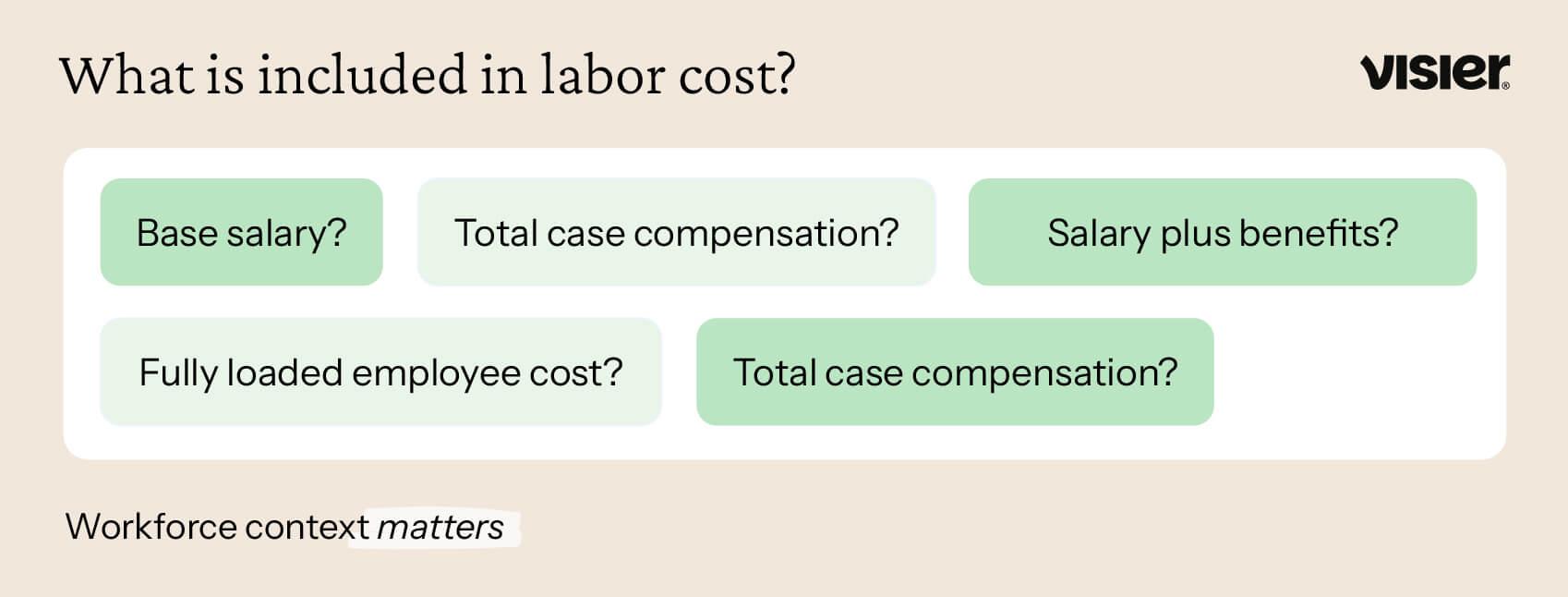
What are the possible definitions? Base salary; total cash compensation; fully loaded employee cost; salary plus benefits; or cost allocated to the employee’s home department versus the work they perform.
Why does it matter? Labor cost is often one of the largest operating expenses, and it anchors workforce plans and budget decisions.
What’s the business impact? Base salary alone can understate what a workforce plan really costs, and charging everything to a home department can make a shared services team look inefficient when its people support several parts of the business. A finance leader building next year’s budget needs fully loaded cost, while a compensation team reviewing pay equity needs base salary.
What are the possible definitions? Enrollment; attendance; course completion; passing an assessment; manager confirmation; or demonstrated application on the job.
Why does it matter? Completion data is used to judge whether learning investments close capability gaps and meet compliance requirements.
What’s the business impact? A course marked “100% complete” can hide the fact that people skipped the assessment, guessed their way through the quiz, or never used what they learned. Leaders may then assume a capability gap is closed when it isn’t.
What are the possible definitions? A role tied to revenue; a role with regulatory responsibility; a role that is difficult to recruit; a role with no ready successor; or a role identified by business leaders.
Why does it matter? A critical role designation directs succession planning, retention spend, and recruiting priority.
What’s the business impact? If you rank roles by job title alone, you may invest in roles that are easy to replace and miss a quieter role that would stall a key process if it sat empty. A succession review needs to focus on roles with no ready successor, while a recruiting team setting priorities needs to know which roles take the longest to fill.
You just read through 21 workforce terms, and almost every one had four or five recognized definitions. Now think about every metric, population, and business question your organization tracks. Most enterprises are dealing with hundreds of these definitions, if not thousands. Each one has to be agreed on, documented, and kept current every time your org structure, systems, or policies change.
That’s a lot to manage on your own, and AI makes the stakes higher. In a meeting, someone usually catches a mismatched definition before it does damage. An AI agent applies whatever definition it’s given, every time, to every manager who asks.
Visier has spent more than 16 years working through these exact questions. That experience is built into how we model workforce data. Using our Workforce Context Engine means that context behind each metric travels with it into every report, every plan, and every AI-generated answer.
It means your teams spend less time arguing about whose number is right and more time deciding what to do about it.
Dozens of definitions are just the start. The AI-Ready Data Problem in HR Tech breaks down the five workforce data problems that kill AI in HR before launch, plus a four-step framework to fix them.