Report
Beyond the AI Hype: The Workforce Trends That Will Define 2027
Published:
A first look at the people, programs, and decisions building the foundation for AI at work.
· 4 min read
A year ago, the boardroom asked HR how fast it could adopt AI. Heading into 2027, the question is harder: What has AI changed, and can you prove it?
That question now sits with the CHRO. You own the decisions that determine what AI investments deliver, from how work gets redesigned to which expertise the business keeps and who answers for the work agents do. Those decisions need evidence, and until now, the evidence has been thin.
Keeping pace with how work is changing is what we do at Visier every day. Between our quarterly workforce reports, macro-trend research, and ongoing analysis of real workforce data, we keep a close watch on how leading organizations plan, hire, grow, and retain their people. This year, the patterns were hard to ignore.
Our new report, Beyond the AI Hype: The Workforce Trends That Will Define 2027, lays out six of them. Some will confirm what you already sense, and others may challenge the plan already on your calendar. Together, they show that the organizations getting the most from AI are the ones building the workforce technology foundation underneath it.
Let's start with the first three.
If you've ever been asked to prove a talent program worked, you know how hard that is. Today, only 35% of HR leaders track program success in real time, and 62% say a lack of manager follow-through is the most common reason initiatives break down.
AI agents are about to help HR close that loop. Picture two high performers in roles with rising external demand, neither of whom has had a career conversation in months. Instead of a company-wide reminder about stay conversations, their manager gets a note before the next check-in detailing who to talk to, why it's so important now, and how to open each conversation. Three months later, HR can see whether those people stayed and what that meant for regrettable attrition.
Marketing had this moment a decade ago, when digital tracking tools helped marketers tie campaigns to revenue. Now it's HR's turn to do the same.
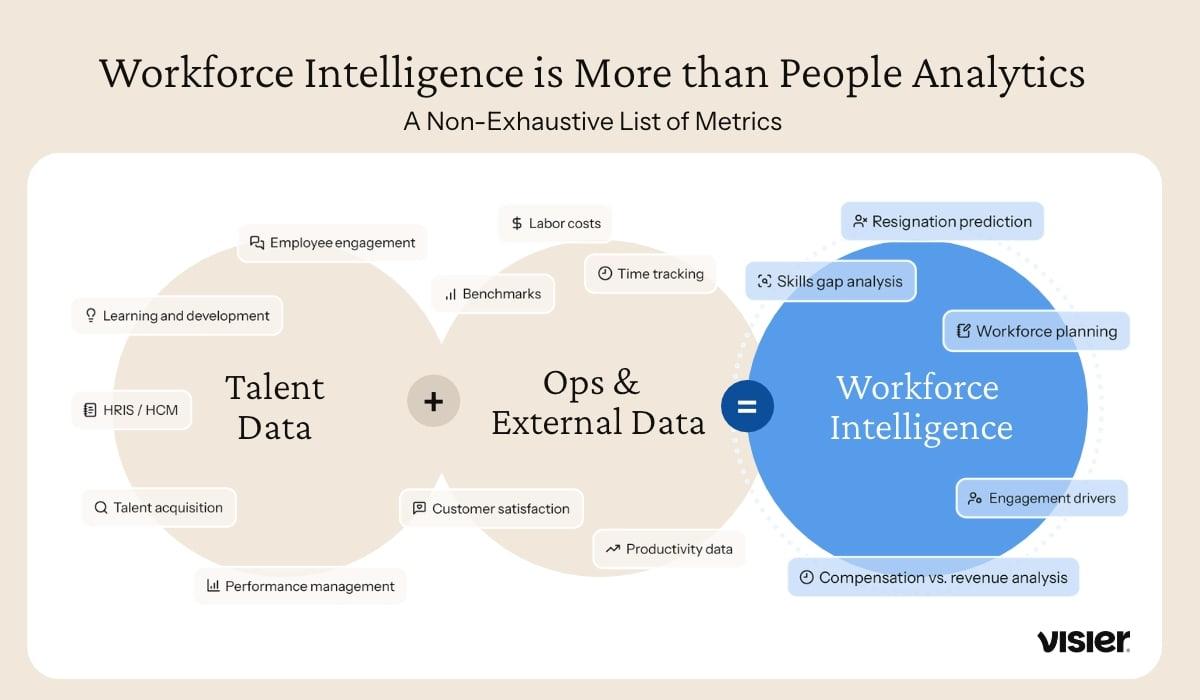
The function that once reported on people now helps the business decide where to invest in them. Using workforce intelligence, leading teams combine hiring, learning, engagement, and performance data with business metrics like labor costs, productivity, and customer satisfaction to answer the toughest questions leaders ask.
At Eaton, that shift from people analytics into workforce intelligence has changed where the team sits. "We're now working directly under the purview of the CEO," says Michael Walsh, senior director of workforce analytics and planning. "When does that happen for a people analytics team?"
That's a long way from fielding ad hoc data requests. The full report digs into how these teams earned their seat at the strategy table.
Generic AI can access your workforce data, but it can't understand what that data means inside your organization. Take a director who lost half her team to another VP in a reorg three months ago. She asks an AI agent which of her remaining managers are flight risks.
A good answer depends on knowing who's on her team today, applying the same definition of "flight risk" as last quarter, and respecting that she can't see scores for the managers who moved. A general-purpose model will give her an answer either way, but without that context, it won't be the right one.
This gap between getting context right and getting it wrong is wide: Gartner (opens in a new tab) predicts organizations that prioritize semantics in their AI-ready data will see agentic AI accuracy rise by up to 80% and costs fall by as much as 60%.
The second half of the report takes on some of the most debated workforce questions of the year, from where work redesign fits in AI strategy to what happens when AI agents land on the org chart. It also reveals what companies are paying to bring back the expertise they cut.
Want the full list, the data behind each trend, and what it all means for your 2027 plan? Download Beyond the AI Hype: The Workforce Trends That Will Define 2027.